
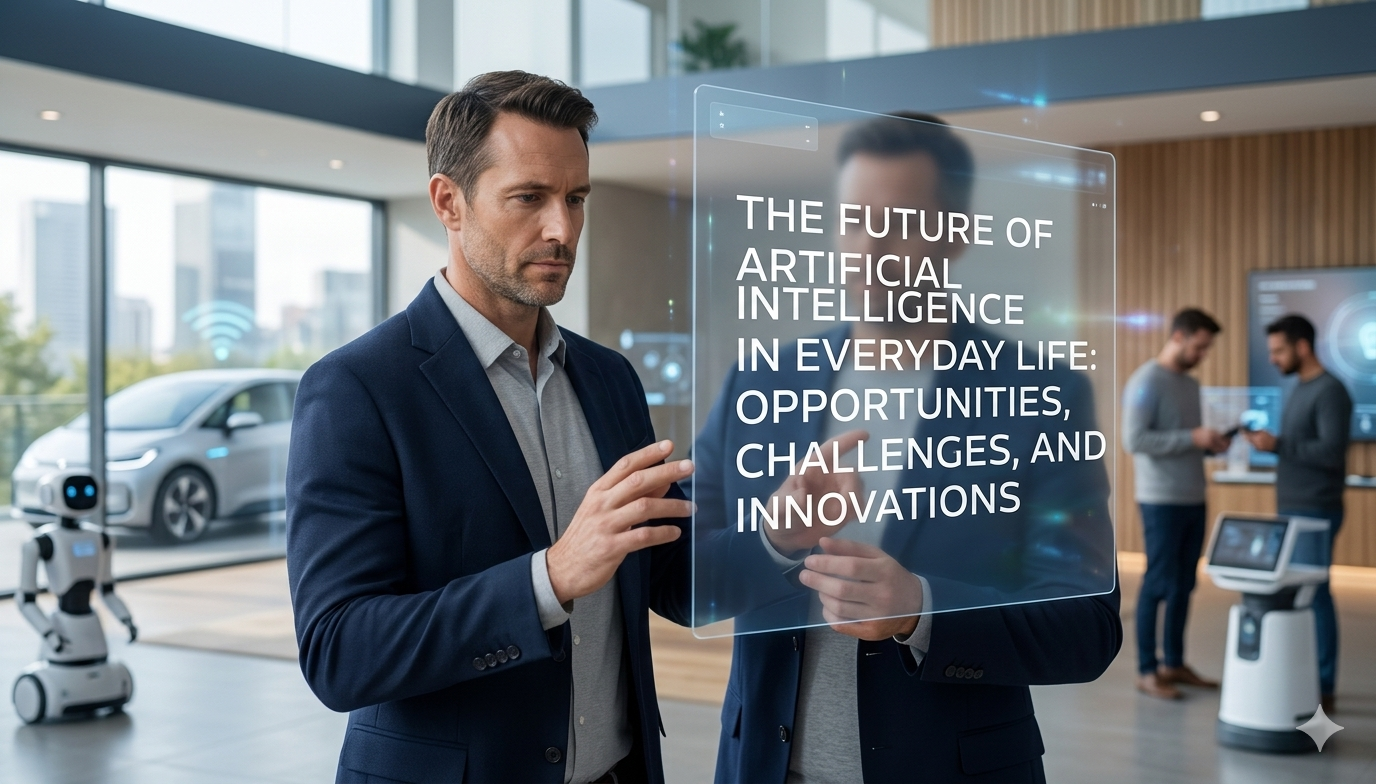
Artificial Intelligence (AI) is no longer a futuristic idea, it has become a core part of modern life. From smartphones and smart assistants to healthcare systems and business operations, AI is transforming how people interact with technology. As advancements continue, AI is expected to play an even bigger role in shaping the future. TechInGot explores how artificial intelligence is influencing everyday life, its benefits, challenges, and what we can expect in the coming years.
Understanding Artificial Intelligence
Artificial Intelligence refers to the ability of machines and software systems to perform tasks that normally require human intelligence. These tasks include learning, reasoning, problem-solving, and decision-making. AI systems use data, algorithms, and computing power to improve performance over time.
There are different types of AI, including narrow AI, which focuses on specific tasks, and general AI, which aims to perform a wide range of human-like activities. While most current applications use narrow AI, research is ongoing to develop more advanced systems.
AI in Daily Life
AI is already deeply integrated into daily activities. Virtual assistants help users manage schedules, answer questions, and control smart devices. Streaming platforms and e-commerce websites use AI algorithms to recommend content and products based on user preferences.
Navigation apps use AI to provide real-time traffic updates and suggest the fastest routes. Email systems filter spam messages automatically. These everyday uses show how AI is improving convenience and efficiency.
In the future, AI will become even more personalized. It will understand user habits and provide tailored solutions, making everyday life smoother and more productive.
AI in Healthcare
Healthcare is one of the most important sectors benefiting from AI. AI-powered systems can analyze medical data, detect diseases early, and assist doctors in making accurate diagnoses.
For example, AI is used in medical imaging to identify conditions such as cancer at early stages. Wearable devices monitor heart rate, sleep patterns, and physical activity, providing valuable health insights.
In the future, AI may enable personalized medicine, where treatments are customized based on a patient’s genetic information and lifestyle. Telemedicine powered by AI will also improve access to healthcare, especially in remote areas.
AI in Education
Education is undergoing a major transformation with the help of AI. Online learning platforms use AI to create personalized learning experiences. Students can learn at their own pace, and AI systems provide feedback based on performance.
AI-powered tools can identify learning gaps and suggest improvements. Virtual tutors and chatbots are becoming common in digital education systems.
In the future, AI will make education more accessible, interactive, and efficient. It will help bridge the gap between traditional and digital learning methods.
AI in Business and Industry
Businesses are using AI to improve operations, customer service, and decision-making. AI-powered chatbots handle customer queries, reducing response time and improving user experience.
Data analytics tools use AI to analyze large amounts of information and provide insights for better decision-making. Automation powered by AI helps companies reduce costs and increase productivity.
In industries such as manufacturing, AI is used for quality control and predictive maintenance. This reduces downtime and improves efficiency.
AI and Smart Homes
Smart homes are becoming increasingly popular with AI-powered devices. These systems allow users to control lighting, temperature, security, and appliances through smartphones or voice commands.
AI systems learn user preferences and adjust settings automatically. For example, smart thermostats can optimize energy usage based on daily routines.
In the future, smart homes will become more intelligent and fully automated, improving comfort, security, and energy efficiency.
Benefits of Artificial Intelligence
AI offers many advantages across different sectors:
- Improves efficiency and productivity
- Reduces human error
- Provides faster decision-making
- Enhances user experience
- Supports innovation and growth
These benefits make AI one of the most valuable technologies of the modern era.
Challenges and Ethical Concerns
Despite its benefits, AI also presents challenges. Data privacy is a major concern, as AI systems rely on large amounts of personal information. Protecting this data is essential.
Job displacement is another issue, as automation may replace certain roles. However, AI also creates new job opportunities that require advanced skills.
Ethical concerns, such as bias in AI algorithms and decision-making transparency, must be addressed. Governments and organizations need to create regulations to ensure responsible use of AI.
The Future of AI
The future of AI looks promising as technology continues to advance. AI will become more integrated into everyday life, supporting innovation in healthcare, education, transportation, and more.
Emerging technologies such as robotics, machine learning, and natural language processing will further enhance AI capabilities. As AI evolves, it will play a key role in solving global challenges and improving quality of life.
Preparing for an AI-Driven World
To succeed in an AI-driven future, individuals must focus on learning digital skills. Understanding AI, data analysis, and technology trends will be important for career growth.
Businesses must also adapt by investing in AI solutions and training employees. Staying updated with technological advancements will help organizations remain competitive.
Write for Us – Share Your AI Insights with TechInGot
TechInGot encourages writers, tech enthusiasts, and professionals to share their ideas about artificial intelligence and future technologies. If you are passionate about innovation, write for us at TechInGot and contribute valuable insights.
We welcome contributors who can explain complex AI concepts in simple and engaging language. Write for Us and help readers stay informed about the future of technology.











Leave a Reply